
Sexing Chicks
How to tell if your chicks are male or female
Sexing Chicks the Traditional Way
The sex of most breeds of chicken cannot be determined at hatching. In most cases, the first reliable differences become apparent between 6 and 8 weeks of age.
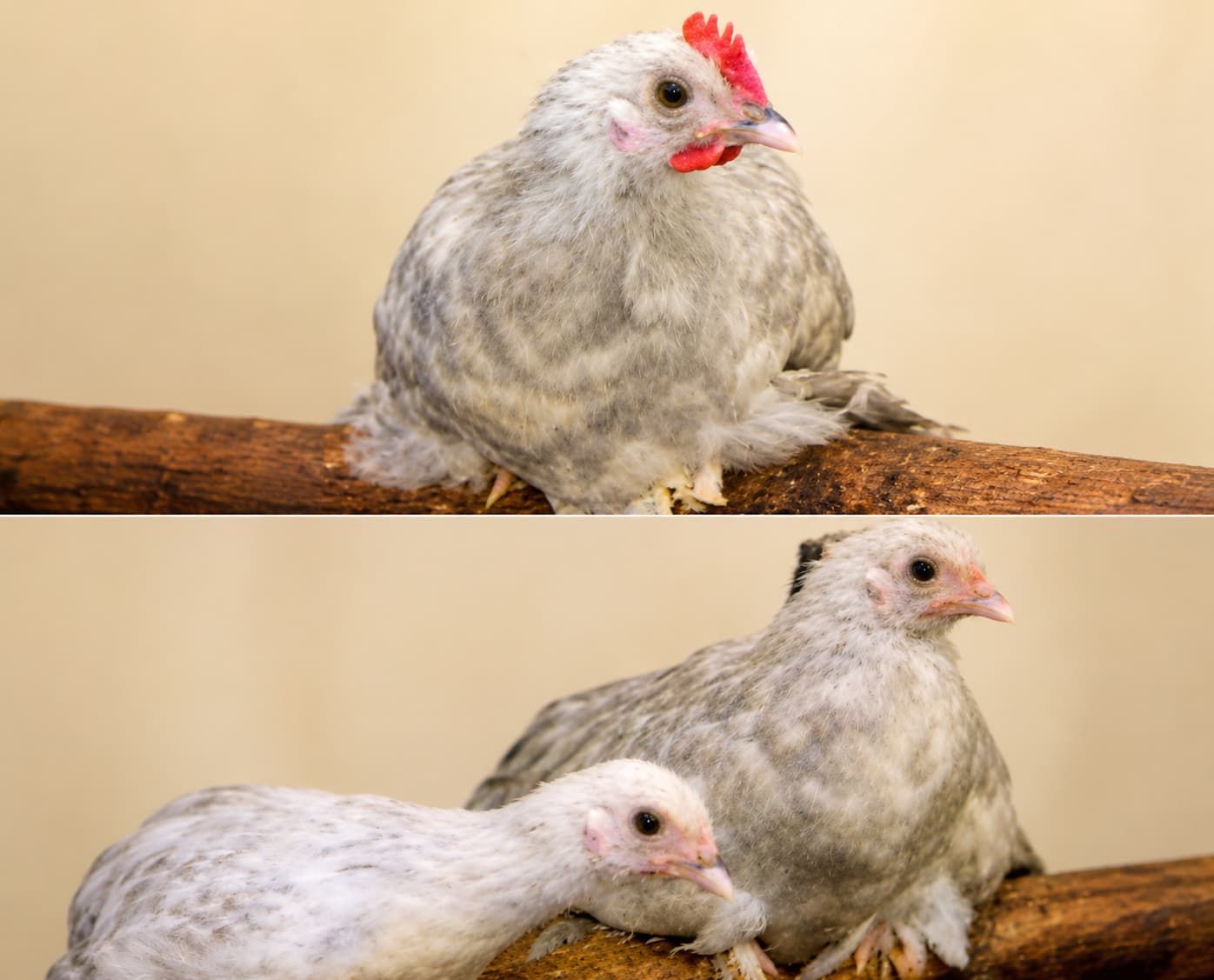
By this stage, male chicks usually develop larger, redder combs and wattles than females, as shown in the photographs below (male above, females below). Males often have thicker, sturdier legs as well.
Cockerels may begin to crow from around 12 weeks of age, although some don't find their voice until much later. As they mature, their behaviour can also provide clues. Young males often stand more upright, with their chests puffed out and heads held high, displaying the confident strutting behaviour typical of cockerels.
Some breeds, however, are notoriously difficult to sex. Silkies are a classic example, and it may not be possible to determine their sex until they are fully mature and either begin to crow or lay eggs!
Auto-sexing Breeds
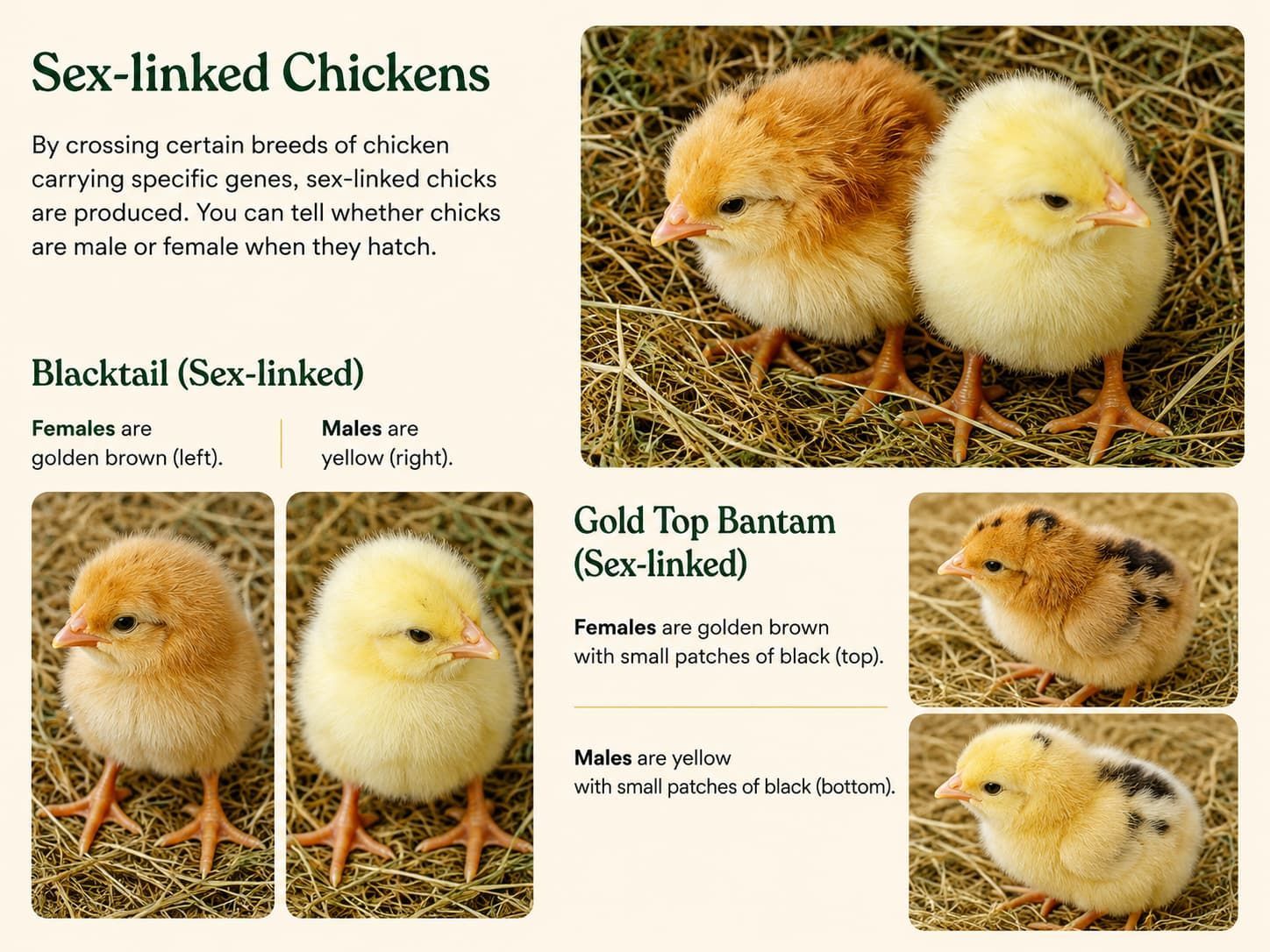
Several breeds of chicken are auto-sexing, which means the sex of the chicks can be determined as soon as they hatch—usually by their colouring or markings.
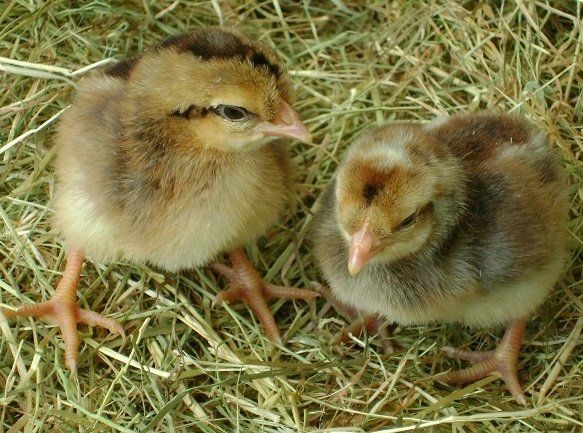
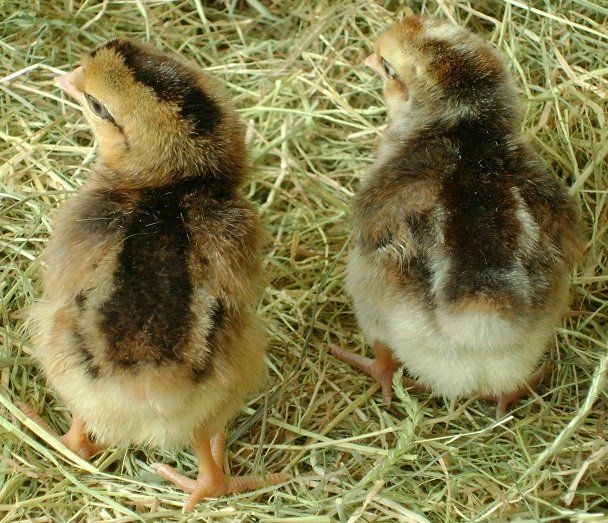
Sapphire Sunset (Auto-sexing Breed)
- Females have distinct dark stripes along their backs. They may have a small white spot on the top of the head, but it is much smaller than that of the male (left).
- Males are paler and less clearly marked than the females and have a large white patch on the top of the head (right).
Sapphire Sunset is the name originally given by Durham Hens to this attractive auto-sexing hybrid.
Other Methods of Sexing Chicks
Feather-sexing
Feather-sexing (also known as wing-sexing) involves comparing the lengths of the wing feathers shortly after hatching. It can be used with certain cross-bred chicks that carry the appropriate feathering genes, but it does not work for the majority of pure breeds.
Vent-sexing
Commercial hatcheries may determine the sex of day-old chicks by vent-sexing, which involves examining the genital structures inside the vent. This technique requires extensive training and experience. If performed incorrectly, it can injure the chick and should never be attempted by hobby chicken keepers.
Important Note
It is often easier to sex chicks when you have several of the same breed to compare, as differences in colour, markings and development become more obvious. If you are unsure, wait until the chicks are old enough to be sexed using the traditional methods.
Never dispatch or rehome a chick until you are confident of its sex.